A Note on Links: When reading back posts, please be aware that links have a short half-life. You can find working links to all of the MHS resources on our Educator Resources Page.

Showing posts sorted by relevance for query questions. Sort by date Show all posts

Monday, February 23, 2015

Teaching Students to Ask Questions

TPS-Barat, Primary Sources Nexus Teacher Resources Blog just posted on another useful tool for helping students engage with primary sources: Question Cubes. They explain:
If your students need help with asking questions when analyzing primary sources, bring out the question cubes. You can make them from paper or cleaned-out school milk cartons. Each student or student group should get two cubes [one with the words "who, what, when, where, how" and the other with "is/are, would/could, should, might/will, was/were"] ... and roll both to help get those questions flowing.
Templates for the cubes are provided here.

One of the reasons I like the idea of Question Cubes is because I think asking questions--especially good questions--is a lot harder than we tend to think. It is also a critical skill in learning and life.

The article "Teaching Students to Ask Their Own Questions" in the Harvard Education Letter outlines a technique to do just that, developed by The Right Question Institute. It is called the Question Formulation Technique.

According to the article,
The QFT has six key steps:
Step 1: Teachers Design a Question Focus. The Question Focus, or QFocus, is a prompt that can be presented in the form of a statement or a visual or aural aid to ... stimulate the formation of questions. The QFocus is different from many traditional prompts because it is not a teacher’s question. It serves, instead, as the focus for student questions.... For example, after studying the causes of the 1804 Haitian revolution, one teacher presented this QFocus: “Once we were slaves. Now we are free.” The students began asking questions about what changed and what stayed the same after the revolution.
Step 2: Students Produce Questions. Students use a set of rules that provide a clear protocol for producing questions without assistance from the teacher. The four rules are: ask as many questions as you can; do not stop to discuss, judge, or answer any of the questions; write down every question exactly as it was stated; and change any statements into questions. ...
Step 3: Students Improve Their Questions. Students then improve their questions by analyzing the differences between open- and closed-ended questions and by practicing changing one type to the other. ...
Step 4: Students Prioritize Their Questions. The teacher, with the lesson plan in mind, offers criteria or guidelines for the selection of priority questions. In an introduction to a unit, the instruction may be, “Choose the three questions you most want to explore further.” When designing a science experiment, it may be, “Choose three testable questions.” ... During this phase, students ... zero in on the locus of their inquiry, and plan concrete action steps for getting information they need to complete the lesson or task.
Step 5: Students and Teachers Decide on Next Steps. At this stage, students and teachers work together to decide how to use the questions. One teacher, for example, presented all the groups’ priority questions to the entire class the next day during a “Do Now” exercise and asked them to rank their top three questions. Eventually, the class and the teacher agreed on this question for their Socratic Seminar discussion: “How do poverty and injustice lead to violence in A Tale of Two Cities?”
Step 6: Students Reflect on What They Have Learned. The teacher reviews the steps and provides students with an opportunity to review what they have learned by producing, improving, and prioritizing their questions. Making the QFT completely transparent helps students ... internalize the process and then apply it in many other settings.(From Teaching Students to Ask Their Own Questions)
 The entire article is worth reading, including the "Sidebar" that outlines the protocol. You can find out more about the Question Formulation Technique from The Right Question's website. To access some of their information, you have to register--but it is free and painless and well worth the time.

Looking for more about questions? Here's a post I wrote awhile back on different types of questions (Essential Questions and Research Questions.)


Monday, October 28, 2013

Essential Questions and Research Questions: Two Very Different—But Equally Important—Things

Historians ask questions and, as I’ve been saying during a spate of recent trainings, the questions you ask have a lot to do with the answers you find. Good questions are the key to interesting and successful historical research projects.

Essential Questions

I am an advocate of essential questions. “Facing History and Ourselves” lays out a convincing case for asking essential questions “to get at matters of deep and enduring understanding.” As Facing History explains, “By connecting material to a significant theme that resonates with the lives of adolescents, essential questions can add relevance and focus to a unit of study.”

Difference between Essential Questions and Research Questions

It is important to remember, however, essential questions are different from research questions, the questions historians use to help them understand the past—and in this way begin to understand these larger philosophical concerns.

For example, “Who am I? What are the various factors that shape identity? In what ways is our identity defined by others?” are clearly essential questions. Research questions, by contrast, approach these larger issues from the side, instead of head on. They are place and time specific—and narrow enough that you can (at least provisionally) answer them by looking at the historical record. “How did German Jews define themselves in the 1920s and 1930s?” “How did the boarding school era affect the identity of Crow tribal members?” are examples of research questions that can lead students to investigate specific historical topics while also allowing them to begin to wrestle with larger issues of identity.

Asking Good Research Questions: Tools for Grades 6-12

Asking good research questions is hard—and is a skill worth teaching. John Schmidt and Jeff Treppa offer tools to help students ask good questions in a larger piece they’ve written on research papers. Especially useful are the handouts they prepared: Guidelines for Forming Historical Questions and Practice: Developing a Historical Question


Asking Good Research Questions: Tools for Elementary Students

Especially for elementary students, Billings librarian Ruth Ferris recommends using Question Matrices to ask better questions. Find her description of question matrices and links to valuable resources in Appendix 8 of “Thinking Like a Historian” (page 29 of the lesson).

Asking Good Research Questions: Another Technique for Everyone

Another technique is to start with the essential question “What has changed and what has remained the same—and why?” In her lesson plan “Thinking Like a Historian”—which focuses on using historic newspapers to explore life during the gold rush—Ruth suggests students use life today as a comparison to “generate a list of general topics and categories that they will need to learn about to develop a snapshot of life in the 1800s. Possible topics to consider: food, clothing, transportation, communication, technology. Then have students ask questions about these topics. See the entire lesson plan.

Asking good questions is a huge step toward developing greater understanding. How do you teach this skill in your classroom?

Monday, March 14, 2022

Your Students Have Been Working on Developing Questions. Now What?

Question Formulation Technique: What's Next?

Longtime readers know that I'm a huge fan of Harvard University's Right Question Institute and their Question Formulation Technique. You'll also know that teaching students to develop questions is one of the social studies skills included in the new standards.  

But what comes next? Developing questions is just the first of our six new social studies skills. (The second is "Plan inquiries.") As importantly, if students just ask questions without any follow-up, there's a risk of them thinking that the activity is make work. 

Not too long ago, the RQI's newsletter focused on answering how teachers can use student-generated questions to drive learning. Here's material, copied shamelessly from their newsletter: 

Video: Using student questions to drive learning

Educators often wonder what to do with questions their students have generated. As Kim Sergent, a social studies instructional specialist, notes, "If you don't use them" (the questions) "you will lose them" (the students). In this video, educators talk about different ways they use student-generated questions — specifically, questions about primary sources. 

Blog: 'Next steps': examples from first-grade
First-grade teachers Ashleigh Burry and Kristy Mandel provide some more examples of what to do with students' questions, including reading and writing exercises, project-based learning, and activities like "wonder wall" and "exploration hour." 

Handout: More 'next steps' ideas and examples (You'll need to complete RQI's free registration to access this material)
We've compiled a list of more examples, based on insights from hundreds of teachers, and put them on continuum: From quick "exit tickets" to multi-day projects, student questions can drive the next steps of learning, no matter what your time frame or objectives. 

More on Developing Questions

Looking for more on getting students to ask questions? Check out this Education Week article, "10 Strategies for Encouraging Students to Ask Questions." 

More on Teaching Social Studies Skills

Teachers from across the state will be gathering to share ideas about teaching social studies skills on Wednesday, March 16, from 4-5 on Zoom. Register here by March 15 to receive an invitation. (Attendees will earn one OPI Renewal Unit.)  

Speaking of workshops--there's still time to register to attend one of our FREE on-the-road educator workshops for six hours of engaging professional development with award-winning classroom teacher Jim Schulz. Jim conducts the best workshops I've ever been to, hands down, and this one includes resources for teaching students to evaluate sources (SS.K12.3). So join him in Great Falls (March 23), Butte (March 25), Missoula (March 28), Bozeman (April 4), Billings (April 6), or Miles City (April 7). Learn more and find a link to register here


Tuesday, November 17, 2020

Teaching Students to Ask Good Questions

 I just watched an amazing, FREE webinar called Make It Virtual; Take It Anywhere: Adapting the QFT to New Environments

I had forgotten how powerful QFT (short for Question Formulation Technique) is. 

For those of you who aren't familiar with it, here's a quick summary of the process (taken from Teaching Students to Ask Their Own Questions): 

Step 1: Teachers design a Question Focus (provide something for students to ask questions about.)

Step 2: Students produce questions according to these four rules:

  • ask as many questions as you can;
  • do not stop to discuss, judge, or answer any of the questions;
  • write down every question exactly as it was stated;
  • and change any statements into questions.

Step 3: Students improve their questions.

Step 4: Students prioritize their questions. (The teacher, with the lesson plan in mind, offers criteria or guidelines for the selection of priority questions.)

Step 5: Students and teachers decide on next steps.

Step 6: Students reflect on what they have learned. 

Sounds simple, right? That's because it is--but it is also very powerful. Students aren't typically taught how to ask questions, and many adults aren't very good at it either. And that's a problem--for democracy and for dealing with doctors or schools or really anyone in authority whose decision directly impacts one's life. 

Using QFT will make your students more engaged learners, which is enough for me. The Right Question Institute has even bigger goals, though. It "aims to make democracy work better by teaching a strategy that allows anyone, no matter their educational, income, or literacy level, to learn to ask better questions and participate more effectively in decisions that affect them."

This webinar was great because

  • It gave a quick intro to QFT
  • It asked participants to practice using the QFT to generate questions (I did It on a piece of paper even though there wasn't anyway to share), so we could see how powerful the technique was.
  • It showed how two teachers used the technique with their students and examples of student work (my favorite project was from an elementary class that was studying the Hoover Dam. It would take very little work to transfer it to the Fort Peck Dam.) 
  • It provided links to lots of additional resources.
  • It offered a way to make distance learning more interactive.
  • The tools they suggested will be useful for in-person/hybrid learning as well--especially if folks are socially distancing in the classroom because it allows/requires collaboration without breathing on each other. 
  • Anything that can help students learn how to ask questions is good! (I'm always surprised by how hard they find it.)

Am I gushing like a fangirl? That's because I am. Check out this training and all of the materials on https://rightquestion.org/

P.S. Do you use QFT in your classroom? If so, I'd love to hear from you!

P.P.S. It's not too late to join us for our online discussion/PD "Integrating Montana History into English Language Arts," TODAY, November 17, from 4:00 p.m.-5:00 p.m. Register here and I'll send you a link

Thursday, September 17, 2015

Question Formulation Technique

Last summer I watched the Recorded Webinar: Introduction to the Question Formulation Technique. It starts off slowly but I found it a worthwhile introduction to QFT--and think QFT could be an extremely useful arrow in your technique quiver. You can watch it here.

Two posts last year focused on QFT: "Teaching Students to Ask Questions" and "Teaching Students to Ask Questions: A Follow-up."

In summary, the process is as follows (taken from Teaching Students to Ask Their Own Questions):


Step 1: Teachers Design a Question Focus. (Provide something for students to ask questions about)

Step 2: Students Produce Questions according to these four rules:
  1. ask as many questions as you can;
  2. do not stop to discuss, judge, or answer any of the questions;
  3. write down every question exactly as it was stated;
  4. and change any statements into questions.

Step 3: Students Improve Their Questions.

Step 4: Students Prioritize Their Questions. (The teacher, with the lesson plan in mind, offers criteria or guidelines for the selection of priority questions.)

Step 5: Students and Teachers Decide on Next Steps.


Step 6: Students Reflect on What They Have Learned.

Steps that I think might pose challenges are Step 1 (designing a good Question Focus) and the Steps 4/5 (using the questions students generate as a meaningful lesson component.) So, I'd love to hear from anyone who has used this with students.

  • What Question Focus did you use? 
  • How did it fit with into your lesson? 
  • What was difficult for your students? 
  • What was it like to cede control--and how much control did you actually cede? 
  • How did it work out? 
  • Would you use this technique again and why or why not? 

Feel free to email me at mkohl@mt.gov or call me at 406-444-4740 if that's an easier way for you to report. I'll write up any feedback I get and report out.

Watch the video or explore the free resources on The Right Question's website (to access some of their material you have to register but it is free and painless). Then give the technique a whirl and let us know how it turned out!

Monday, December 18, 2017

Teaching Students to Ask Good Questions

Asking good questions is hard for students.

I discovered this for myself when I went into an eleventh-grade classroom to help students working on National History Day research papers formulate research questions. Because I'd always rather "borrow" than reinvent the wheel,  I took inspiration from John Schmidt and Jeff Treppa (authors of The Research Paper: Developing Historical Questions), and I brought in handouts they created: Guidelines for Forming Historical Questions and Practice: Developing a Historical Question. And the kids *really* struggled.

I've written before about K-12 appropriate techniques to work this skill including Question Cubes and the Question Formulation Technique. I recently came across another one, one of the many interesting "Visible Thinking Routines" featured on Project Zero's website. It's called Question StartsA Routine for Creating Thought-provoking Questions. Like most good routines, it is deceptively simple. Visit the Project Zero website to get all the details, but in brief, here's how it works: 

1. Brainstorm a list of at least 12 questions about the topic, concept or object. Use these question-starts to help you think of interesting questions:
  • Why…? How would it be different if…?
  • What are the reasons...? Suppose that…?
  • What if…? What if we knew…?
  • What is the purpose of…? What would change if…?
2. Review the brainstormed list and star the questions that seem most
interesting. Then, select one or more of the starred questions to discuss
for a few moments.

3. Reflect: What new ideas do you have about the topic, concept or object
that you didn’t have before?

Do you actively teach asking good questions in your classroom? Why and how? Or why not? I'd love to hear from you.


Monday, September 27, 2021

Social Studies Standards and Skills

How do you feel about the new social studies standards? (This is a real question, not a rhetorical one. Please email me!) I'm excited about them--but can also imagine they seem a bit daunting. So, I'm starting a series of periodic posts focusing on resources to help you meet specific standards, starting with the skills section, which are supposed to be integrated across all grades. 

Skill #1 (SS.K12.1): Develop Questions 

Question Formulation Technique (QFT)

Practicing the Question Formulation Technique (QFT) is a GREAT way to teach students how to develop questions. Here's a link to a blog I wrote sometime back describing the technique, but the best thing to do is go to the Right Question Institute Website, and start exploring the materials on their Teaching and Learning page, including lesson plan templates, PowerPoints, and videos showing QFT in action), and/or watch this 27-minute tutorial on YouTube. 

Question Starts

Of course, there are other ways to help students learn how to develop questions. I came across Question Starts when I was exploring the Thinking Routine Toolbox on Harvard University School of Education's Project Zero website. 

Like most good routines, this one is deceptively simple. Here's a PDF from Project Zero with all the details, but in brief, here's how it works:

  1. Brainstorm a list of at least 12 questions about the topic, concept or object. Use these question-starts to help you think of interesting questions:
    Why…? How would it be different if…?
    What are the reasons...? Suppose that…?
    What if…? What if we knew…?
    What is the purpose of…? What would change if…?
  2. Review the brainstormed list and star the questions that seem most
    interesting. Then, select one or more of the starred questions to discuss for a few moments.
  3. Reflect: What new ideas do you have about the topic, concept or object that you didn’t have before? 

Question Cubes

Billings librarian (and MHS Teacher Leader) Ruth Ferris introduced me to question cubes, a variation on question starts, and TPS-Barat/Primary Sources Nexus Teacher Resources has a template online so you can make your own. They explain:

If your students need help with asking questions when analyzing primary sources, bring out the question cubes. You can make them from paper or cleaned-out school milk cartons. Each student or student group should get two cubes [one with the words "who, what, when, where, how" and the other with "is/are, would/could, should, might/will, was/were"] ... and roll both to help get those questions flowing.

How are you going to work with your students on developing questions this year? 


Thursday, February 9, 2023

Last Chance for This Amazing Training! (Plus a Favor)


First, the Favor

If you used Montana: A History of Our Home last semester, would you please take this survey? It's anonymous--unless you want to be entered into the prize drawing, in which case there's a chance at winning a fabulous prize. Either way, you will have my eternal gratitude.

The Training You Won't Want to Miss

"It was truly a wonderful learning experience."--Montana teacher

Montana teachers have raved about the Right Question Institute's free, online  "Teaching Students to Ask Their Own Primary Source Questions." And, luckily for you, RQI is offering the course one last time, asynchronously February 28-March 28, with two optional live webinars. 

Learning how to ask questions is an essential skill, one our students struggle with and one that isn't explicitly taught often enough. ("Develop questions" is also the very first skill listed in the new state social studies standards.)  And asking questions can transform the way students approach primary source learning. 

Join the Right Question Institute for Teaching Students to Ask Their Own Primary Source Questions: a new, free online course made possible by the Library of Congress Teaching with Primary Sources (TPS) program

Read more about the course on the course information page and then follow this link to register. Deadline to register is February 24.

If you send me your certificate of completion, I will provide you with 12 OPI Renewal Units.  

Can't take the course, but want to learn more? Check out these self-paced, on-demand modules

Want to see how one fourth-grade, Nevada teacher applied what she learned? Check out this video(Note: She uses the term "QFT," which stands for "Question Formulation Technique," the routine for teaching students to ask questions that she learned, and you will learn, if you take the "Teaching Students to Ask Their Own Primary Source Questions" course.)  Also: Her project--having students draw their own maps of the state of Nevada based on their own questions--is an idea worth stealing! (Here's an 1887 map of Montana Territory. And here's the map's metadata and a little bit of information about the mapmaker.)

Tuesday, June 8, 2021

"Teaching Students to Ask Their Own Primary Source Questions" Online Course

 Only last week, I said farewell for the summer--but then the folks at the Right Question Institute emailed me about this free opportunity that is too good not to share. I've been advocating teaching students how to ask questions for a long time now--and am thrilled that developing questions is one of the skills included in our new state social studies standards (SS.K12.1).  

The Right Question Institute can help you help your students master this essential skill. And they are doing it with primary sources! And it's free! And, if you email me a copy of your certificate at the end of the course, I'll be happy to issue a certificate for 12 OPI Renewal Units. 

Here's the Right Question's promo and link to registration:   

When studying primary sources, questions can act as both a magnifying glass and a telescope: They help us to see more clearly what is in front of us and then inspire us to look beyond. Learning how to ask questions is an essential skill that can transform the way students approach primary source learning. Join us for “Teaching Students to Ask Their Own Primary Source Questions”: a new, free online course developed in collaboration with, and made possible by, the Library of Congress Teaching with Primary Sources (TPS) program.  

This self-paced, four-week online course demonstrates how to combine the Question Formulation Technique with the primary source artifacts and teacher resources available at the Library of Congress to design and implement more effective, student-centered, inquiry-based primary source learning. Participants walk away with a peer reviewed lesson plan, a new community of educators, and pathways to extend their learning. The course opens week to week and requires approximately 12-16 hours of work total, or three to four hours of work per week. 

P.S. We still haven't awarded that final prize to the forty-eighth person to take the survey. Maybe it has your name on it! 

Thursday, December 16, 2021

Tips from a Veteran High School Teacher

 I saw long-time, but now retired, Billings high school teacher Bruce Wendt at the MFPE conference in Great Falls, but I wasn't able to attend his presentation. Knowing I had missed a valuable session, I emailed him, and he emailed back with some of the thoughts he presented. They are too good to keep to myself, so I wanted to share them with you as well. 

In his session, Bruce related his "philosophy of how to teach history."

"I suggest teachers have a core theme (central question) around which teachers build their courses. Rather than following the chapters of a text or worrying about meeting standard x, decide your goals.  

For years, I used a paraphrase of Crevecoeur’s 'What is an American?' All of my assignments and discussion would hang from that question. Not that I said that every day or even on a regular basis, but it that became in a sense my final at the end of the year."   

"My second essay question for years was 'What is the American Revolution?' (Bruce means this broadly, suggesting that there was more than one, seeing the Civil War as a second and the New Deal as a third revolution.)  

Shaping your class around big questions, and having students answer those questions using evidence from their readings, solves the problem of students simply googling answers to questions by "asking questions that a Google search does not answer directly."

 It's harder--at least at first--to teach this way than to follow a textbook, but to my mind, there are any number of benefits. Your class will be much more interesting. Students will come out of your class understanding that history is more than "one damn thing after another." And finally, they'll have gained a lot of practice thinking deeply, making evidence based claims, and "constructing meaning."

 To my mind, it doesn't get much better than that. 

Do you use a single core question over the course of a semester? Unit-based core (or essential) questions? Do have a philosophy for teaching history? I'd love to hear about it.   


Thursday, January 19, 2023

Teaching Rigorous and Meaningful High School History

Guest post by Bruce Wendt

 Martha Kohl’s recent column that linked to Michael Yell’s post on teaching history led to reflecting on my own evolution in teaching history on the high school level.  Very few students “get” history or understand why they are required to enroll in what is to many a numbingly boring class.  How do we tackle this? Here are some suggestions.

The ability for teenagers to think historically begins on the first day of class with a challenge for them to understand that the discipline is more than a stolid march of dates and folks.  I believe we start the year knowing where we want to be on the last day.  We study past events not as an antiquarian exercise but to begin putting together the puzzle to know where we are in the present and what the future holds.

Two specific suggestions to begin the year: First, work with the students to help them understand that reading history is different than enjoying a novel or studying a biology textbook. I assign the textbook, articles and academic books in the first week. Students need to look for the thesis/argument in the source they are examining. Throughout the course of the year, we continue to focus on the thesis. History centers on core themes or the threads that link the past with the present. Years ago, Carleton College’s history department published years ago a succinct essay on how reading leads to thinking.  I think we all want lucid discussions in the classroom and the ability to recognize ideas over time is crucial—early lessons help guide students to developing these skills.

Second, history is built on interpreting primary documents and making reasoned arguments both in verbal discussions and in writing. For years the first documents we examined in American history were the operating instructions for the Virginia Company and the Mayflower Compact. When we do this, we are moving on two fronts.  We practice interpretation, but we are also setting the stage for events later in American history.  These two documents also demonstrate stark differences in the Massachusetts and Virginia values of the early colonial period and then during the Revolutionary and Civil War.  As teachers who know where we are headed, we can push students to think for themselves about these threads.

 Multiple resources have published worksheets on interpretation including the National Archives. I would suggest reducing the questions to a simple 5 or 6 that still capture the essence of the document. After using them the first week, students are expected to use the process for the rest of the year in their analysis. I was more interested in weaving the source into the march of history than reading worksheet questions every time we used a document. The goal with these questions is not to achieve the “right” answer but to begin a process of critical examination and knowing/practicing the skills needed to build arguments.  

Be warned, however: students will be frustrated and annoyed (especially those who have scored well in earlier classes by putting on paper what the teacher wants) for the first several weeks. One must be patient and encouraging until students understand that they can be successful by articulating what they believe based on their interpretation. 

I’m always happy to answer questions or discuss ideas. For an extended view of establishing sophisticated student thinking, I would suggest Stanford’s Sam Wineburg’s Historical Thinking and Other Unnatural Acts: Charting the Future of Teaching the Past. Also useful is the guide the National Council for the Social Studies published in 2010 that organizes the curriculum around ten themes with multiple classroom examples.

Bruce H. Wendt, Billings West High School (retired)

Thursday, November 21, 2013

Happy Thanksgiving

I'm driving to Seattle next week to spend Thanksgiving with my brother and sister-in-law. Crossing icy mountain passes (McDonald, Lolo, Fourth of July, and the dreaded Snoquamie) is a memorable part of our family's Thanksgiving tradition. So are my sister-in-law's creamed onions, my cousin's delicious raspberry-cranberry relish, my nephew's artful apple pies, and the raucous game Scattegories we always play after dinner.

How do you and your students celebrate Thanksgiving? What do you remember of Thanksgivings from your childhood? How are Thanksgiving celebrations today similar to, and different from, the Thanksgivings of earlier times?

What has changed and what has remained the same is one of my favorite research questions. Answer this question by having your students interview elders about their Thanksgiving memories. MHS has a guide to using oral history in the classroom. It has great tips and training exercises that will be useful even if you don't choose to have your students conduct full-blown oral histories. I think an informal interview is more appropriate for this project, but all good interviews require scaffolding. Thus, I recommend brainstorming interview questions (and teaching them the difference between open-ended questions and closed "yes-no" questions) before sending them home to gather information.

Alternately, ask your students to look for answers in the historical newspapers on the Chronicling America site. To limit your search to Montana newspapers, select "Montana" from the list of states. Type the word "Thanksgiving" in the search box and see what comes up. After looking through a few articles, have your students to make a copy (or write down) something they found interesting (including the citation!). Share these items as a class and compare what you found to Thanksgiving today. A quick look at the historic newspapers had me thinking about Thanksgiving parades, shopping and what might politely be termed overindulgence. (You may want to assign students different pages from the search, so they all read different articles/advertisements).

Looking for a few good secondary stories about Thanksgivings past? Check out these from Ellen Baumler's Montana Moments blog: "Mining Camp Thanksgiving,"  "A Mild Thanksgiving in Wild Miles City, 1882," and "Thanksgiving Day Murder at Elkhorn."

Finally, check out this wonderful blog post, "Native American Perspectives on Thanksgiving," from our friends at Project Archaeology, which includes links to lesson plans, videos, and more.

Thursday, April 1, 2021

Free online PDs (graduate credits available for $$)

 The IEFA Best Practices Conference is scheduled for May 15-16. This is always one of my favorite conferences. There isn't much posted yet about the actual session topics, but OPI always does a bang-up job with this conference, and I always learn tons. Register (and find more information) here

I also just found out that National Geographic is offering free online courses (with the opportunity to pay for graduate credits). Learn more and register here

Six of them run from April 7-May 11, including "Integrating Service with Learning Goals," Collecting Data to Explore Plastic Pollution in Our Communities," "Connecting the Geo-Inquiry Process to Your Teaching Practice," "Mapping as a Visualization and Communication Tool in Your Classroom," and "Teaching Global Climate Change in Your Classroom."   

But the one I'm most excited about is "Teaching Students to ASK Their Own Geo-Inquiry Questions." This course was developed in partnership with Harvard's Right Question Institute (RQI) and integrates RTI's Question Formulation Technique with the "ASK phase of the National Geographic Geo-Inquiry Process."  

As longtime readers know, I've written about the Question Formulation Technique before, because I'm adamant about the importance of teaching students to ask good questions, which is harder than it looks. I was surprised to learn when a teacher invited me to come into her 11th grade American history class to help her students develop research papers, that many, many students struggle with asking good questions--but pleased to discover (from the RQI) that it is a learned skill. 

Developing questions is also one of the six social studies skills highlighted in the new social studies content standards that go into effect July 1. (The others are planning inquiries, comparing and evaluating sources, gathering evidence to develop and refine claims, communicating conclusions, and taking informed action.) 

Speaking of which, I hope you can join us for our final online PD on April 20, from 4:00 p.m.-5:00 p.m., to learn more about "The New Montana Content Standards for Social Studies." Register here

Monday, January 7, 2019

"Jigsawing" the Textbook to Make Room for Primary Source Investigations (Plus Links to Fur Trade Resources)

Friends in Billings are designing a new semester class in Montana history, which has led me to think more about how I would build on the material we have available--particularly our award-winning textbook Montana: Stories of the Land--to teach Montana history. (Because, as we all know, a textbook, no matter how good it is, is not a curriculum.) Over the next few weeks I'm going to expand on a few ideas. I hope they will have immediate practical application for some of you teaching Montana history, while also providing some models that can be applied to other courses.

The first idea comes from Great Falls teacher Jana Mora, who created  her Montana Fur Trade: Four Square Primary Source Lesson Plan as part of a three-year Teaching American History professional development program coordinated by the Montana Council for History and Civics Education. Jana designed her lesson for grades 9-12, but I think it is adaptable to middle school classes as well.

Jana asked students to look at a variety of sources--journals, pictures, stories, and biographies to explore four specific areas in depth before creating a four square display with the information they uncovered.

One thing I particularly love about her lesson is her use of  "jigsawing." Jana assigns groups of students different parts of Chapter 5, "Beaver, Bison, and Black Robes: Montana's Fur Trade, 1800-1860."  Each group becomes an expert on their section. Then she reorganizes the groups so that an expert for each section is in each group and can teach the other group members. That way, everyone gets all the information from chapter 5 without having to read the entire chapter. This make sure that everyone has basic background while freeing up time to dive into primary sources.

Jana required each student to examine two journals and two pictures. Under the journals, the students create "dialectical journals, creating a dialogue by selecting phrases they find important or interesting and writing a reaction for each phrase. For each image students complete an image analysis worksheet she created called "Stepping into a Picture."

Each day of the project, Jana ends the class with a brief discussion, during which she asks, "What did you find out today that you didn't know or that challenges something you thought you knew?" What a great question! She also has students tie what they learned that day back to essential questions she posed at the beginning of the lesson plan. (Her questions included "How did beaver change the history of Montana?" "In what ways were the Indian people involved in the fur trade?" "What induced the shift in the marked from beaver to bison?" and "Who were the 'Black Robes' and what influence did they have on Indian living in Montana during this time?")

After all students have completed their four squares (which show the journals and pictures and their analyses), students complete peer evaluations, rotating and responding to each others' work. I love this part, too, because it engages students in even more sources and asks them to note connections and ask questions. Finally, students write a paragraph summarizing the overall significance of the fur trade and responding to the essential questions that kicked off the investigation.

Jana's lesson plan includes detailed instructions, a rubric, and list of likely primary sources, so it's more or less plug-and-play for Chapter 5 of Montana: Stories of the Land (though, of course, you'll want to check the links). But it is also a great model for other topics, because it balances
  1.  the need to provide background information (students can't do a good job learning about a topic or analyzing primary sources without it) with 
  2. allowing students to conduct their own investigations and 
  3. having students spend time experiencing primary sources, which is often what brings history alive.
Do you have other successful strategies for accomplishing these (sometimes competing) goals?  If so, tell me about them so I can share.

Monday, April 8, 2019

New IEFA Resources from the Montana Memory Project

Jennifer Birnel at the Montana Memory Project has created two new exhibits for classroom use:

Montana Native American Boarding Schools
Native American Leaders

Both exhibits are based on images that have been digitized by the Montana Memory Project. The exhibits are great in their entirety, but they are also a great way to find images of boarding schools or Indian leaders--and you can download and specific images by "right-clicking" (make sure to copy the provenance!)

With help from Mike Jetty at the Indian Education Division of the Office of Public Instruction, Jennifer has come up with some great discussion questions. I especially like the questions and context provided for the Indian Leaders exhibit. As Jennifer explains, the "image titles and descriptions in this presentation were supplied by the library, museum, or archive that shared the image with the MMP" and the titles and descriptions were often created by the original photographer. Because of this, "items may not be described in appropriate terms or without bias." She's come up with a great set of questions to help students think about the images, and titles, in context, including:
  1. What does it mean to catalog an item? Why does cataloging not take into account cultural rules?
  2. What terms in the description of Chief Big Rock in the Chippewa Cree
  3. section are inappropriate? Why? Can you find other terms in the image descriptions that are cause for
  4. concern? Why are they an issue? What could be done to improve the descriptions?
  5. Look specifically at the images of Chief Koostata of the Kootenai. Ask: Who Created it? For what purpose? When was it created (what context)? Why do you suppose the photographer took these specific images?
  6. Examine the image of Bear Chief in the Blackfeet section. The captions on the image was created by the photographer. Why would he have given this image that specific title? How would you correct it?
  7. Do these images perpetuate the stoic Indian stereotype? Can you find images of Native Americans smiling or laughing?
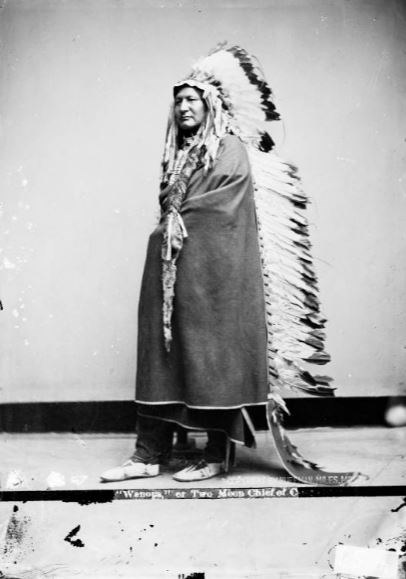
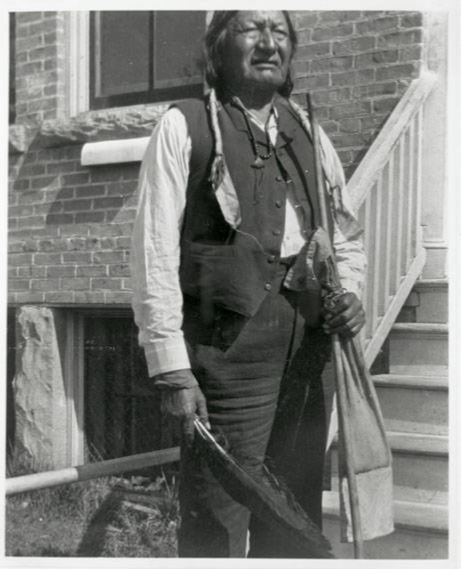
My favorite images in the Indian Leaders Exhibit are the ones that show the same leader in different contexts (for example, these pictures of Northern chief Two Moons--left, photo by William Harvey Harrison, c. 1910, University of Montana, 72.0749; right, photo by Stanley Morrow, c. 1878, Montana Historical Society, 981-172).


Both Jennifer and I are interested in how you use these exhibits, and how they could be made even more useful to you, so if you use either exhibit in your classroom, let me know how it goes!

P.S. High School Teachers: If you are thinking about applying to become an MHS Teacher Leader in History, can you let me knowLearn more about the program and the application process here or email me with questions.

Monday, October 4, 2021

Social Studies Skills, Continued

Last week I introduced a new periodic series on resources to teach the new social studies standards with post on developing questions. This week, I'm going to focus on planning inquiries and comparing and evaluating sources for relevance, perspective, and accuracy.  

Skill #2 (SS.K12.2): Plan Inquiries 

I bet most of you already work with students to conduct inquiries--from posters on the different tribes of Montana and "living statues/wax museums" in elementary grades to more in-depth research projects in middle and high school.   

To reassure yourself that you've been doing inquiry all along (or for a quick introduction to the idea) check out Edutopia's  "What the Heck Is Inquiry-Based Learning".   

Unless you, as the teacher, provide the guiding question, the first step is developing a research question. I covered developing questions pretty thoroughly in my email last week, but I forgot to mention resources from Teachinghistory.org that focus specifically on helping students develop research questions.  

The next steps typically include other skills listed in the standards (compare and evaluate sources for relevance, perspective, and accuracy; use sources to gather evidence to develop and refine claims; and communicate conclusions). That's why inquiry is so powerful!

National Geographic has educator resources to support implementing the Geo-Inquiry Process into your classroom. 

The Stanford History Education Group creates some of the smartest, best curricular material out there. Designed for middle and high school students, their Reading Like a Historian lessons ask students to engage in a historical inquiry by analyzing primary sources from different points of view to answer a guiding question. To access their lessons--over 150 of them--you have to register, but registration is free. If you teach middle or high school, and don't use SHEG's resources, I encourage you to take a moment and browse their site. You'll like what you see. 

For middle and high school classes, National History Day is a natural way to integrate inquiry.  Montana's contest is on hiatus this year, but that doesn't mean that you can't use NHD resources in your classroom to help students plan inquiries. Use these links to find NHD's Middle School Teacher Resources booklet and their two part high school booklet (Part 1 and Part 2).  

Do you have a favorite resource for helping students plan inquiries? If so, please share! And stay tuned for the next installment on the social studies standards.  

P.S. Don't forget to sign up for our next online PD,  October 13, from 4-5: "Diving into the New Social Studies Standards." Register here before October 12 to receive a link to the Zoom meeting.


Thursday, November 16, 2017

How Does Your District Teach Montana History?

With the help of the Montana Council on Social Studies and the Montana Council for History and Civics Education, we're collecting data on how, when, and for how long Montana history is taught in K-12 classrooms. The more information we receive from districts across the state, the more useful the results will be.

Please help us out by
  1. Taking this short survey.
  2. Asking your curriculum coordinator and/or district superintendent to take the survey.
The survey has some questions best answered by classroom teachers and other questions best answered by administrators, who have a birds-eye view. So responses from both teachers and administrators are vital.  

I know life is extremely busy, but I'd really appreciate your help.

Questions? Don't hesitate to contact me.


Thursday, April 26, 2018

Primary Sources: Perfect for Focus Activities

I've written about teaching with primary sources before, for example in this 2012 article cleverly named "Teaching with Primary Sources," and in this post, which recognizes that exposure to primary sources is not enough. But I believe the topic bears revisiting.

Primary sources can help promote empathy, curiosity, and engagement; make students feel like “real historians”; provide an opportunity to practice close reading (images are great for this!); and teach students how to evaluate the evidence and the quality of a source.

With so many sources now available, through the Library of Congress, National Archives, Montana Memory, and other websites, finding primary sources is no longer the main barrier to integrating them into the classroom. The barrier is figuring out how to use them effectively.

One of the easiest ways to effectively integrate primary sources into your classroom is to use them for focus activities--to introduce a unit or refocus students' attention at a midpoint.

For focus activities, I especially like primary sources that

There are lots of different focus activity techniques:
  • Visual Thinking StrategiesCrop It and Zoom-In (for images)
  • Class or pair/share discussion based on one or two well-crafted questions, especially after giving students a few minutes to "write their way in" (3 minutes of non-stop writing to get thoughts down on paper--without worrying about spelling, punctuation, etc.)
  • After reviewing source, have small groups of students generate a list of questions about the upcoming topic of instruction. 
Do you have a favorite strategy for working with primary sources that I've missed or a favorite primary source that you use with your class? Share it with me and I'll share it out.

P.S. The deadline to apply to become a Middle School Montana History Teacher Leader is fast approaching. If this interests you, make sure to submit your application before April 30. If you have questions about the program, don't hesitate to contact me.


Thursday, January 13, 2022

IEFA Professional Development


Teaching Students to Ask Their Own Primary Source Questions Online Course

The Right Question Institute is once again offering a free, online course that will introduce you to the Question Formulation Technique and discuss how it it can be used with primary sources.

 Teachers have raved about this monthlong, self-paced course that will help you teach the essential skill of formulating questions and meet the new social studies standard--SS.K12.1 is Develop questions. And if you email me a copy of your certificate at the end of the course, I'll be happy to issue a certificate for 12 OPI Renewal Units. The course runs February 1 through March 1 and the registration deadline is January 27. Learn more and register here.

January 19, 2022: Indian Education for All

Join Indian Education Specialist Mike Jetty to learn more about resources to integrate IEFA into your classrooms--and bring your own favorite resources to share. Register here before January 18 to receive a link to the Zoom meeting.


Monday, November 15, 2021

Engagement Strategies

 We had a great online professional development last week, with teachers coming together to share their favorite engagement techniques. Here are a few ideas that came out of the session. 

Silent discussion: If you have middle school students who are hesitant to participate in discussions because they are anxious about what their peers will think, try a silent discussion. The teacher who presented this idea said she puts questions on big poster boards around the room. Students circulate, answering the questions on sticky notes. She then puts students into groups and gives each group one of the poster boards and asks them to organize and synthesize the answers on the sticky notes and then report out. 

Character Day: First day of the unit is Character Day. Characters can be people or items—in the Africa unit, salt is a character. Each student chooses a different character—they must do a little research on their character, then when the character comes up, the student shares their research. 

Inquiry: Have student questions that guide your unit of study using the Right Question Institute's Question Formulation Technique. There is LOTS of free information on the Right Question Institute's website (though you have to register to access it). And they'll be offering a free training for 12 renewal units next spring (you can sign up for the waitlist here.)  

Primary Sources: Maps, historic photographs, objects... This is obviously a favorite of mine. 

Participants also pointed to ideas shared on the website Ditch That Textbook and in the book Teach Like a Pirate. They also talked about games they play with students ("Would you rather" and "Four Corners"), asking students to tweet as characters, rewriting the Declaration of Independence as a break-up message, and more.  

Thanks to all the creative teachers who participated in the session! I learned a lot.