A Note on Links: When reading back posts, please be aware that links have a short half-life. You can find working links to all of the MHS resources on our Educator Resources Page.

Showing posts with label online resources. Show all posts

Monday, May 25, 2026

Summer Listening Suggestions

 Thank you to those of you who have taken our end-of-the-year survey! There are still two prizes left to give out so if you haven't had a chance to tell us what you think of Teaching Montana History and to share your favorite lesson plan or teaching strategy, please do so through this link..

One of the questions we asked was what you'd like to see more of, and several of you said podcast recommendations. You are in luck!

Laura Dukart from Wibaux wrote in to recommend The Obit Project, "a story-driven podcast about the lives of real Montanans after they die."

Michelle Pearson, from Two Geeky Teachers, shared a list she created of dozens of recommended podcasts to help you become a better educator, from "10 Minute Teacher Podcast" to a long list of podcasts to use with students. You can find her entire list of recommended summer listening here.   

Both Michelle and Laura were responding to my call for recommendations. If you have book, podcast, or other recommendations for summer, please send them my way and I'll share them out! And meantime, don't forget to complete our end of the year survey!

P.S. If you are changing schools, please re-subscribe using your new address! We'd hate to lose touch.


Monday, February 16, 2026

Historical Picture Prompt Short Story Contest and Resources Available through the Montana History Portal

 Our friends at the Montana History Portal have some great activities and new resources available. 

Historical Picture Prompt Short Story Contest is in full swing

Get your story writing skills ready! The Montana History Portal is hosting the 6th Annual Historical Picture Prompt contest. Using any photo in the Portal collection as a story prompt participants will write a fictional short story (650 words or less) and enter through our submission form. Winners will be chosen from grades 3-6, grades 7-12, and adult. Entries will be accepted starting January 5, 2026, and the deadline to enter is February 27, 2026. 

For more information, photos, and submitting your entries, go to the Montana History Portal Contest page.

Montana The Magazine of Western History

Take a moment to step back into history! Access issues of Montana the Magazine of Western History through our JSTOR access. The collection includes issues from 1951-2022. 

Published by the Montana Historical Society since 1951, Montana The Magazine of Western History contains articles that showcase the people, places, and events that shaped the state and the western region.

Access the collection here.

Note that we at MTHS have discussion guides (some created by Teacher Leaders in History Dylan Huisken and Kim Konen) for a small number of Montana The Magazine of Western History articles. You can find those here.

Montana Field Guides

Montana Field Guides provide information on the identification, distribution, status, and ecology of Montana's animals, plants, lichens, and biological communities. Guides can be downloaded to be taken into the field!

Thursday, February 5, 2026

Under-told Stories and Simulations and Role Plays

Under-Told Stories

Our January Third Tuesday Professional Development session focused on resources to incorporate under-told stories into your classroom, particularly the histories of African Americans, women, and Chinese immigrants.

We captured the links mentioned in this Google Doc, but here are a few highlights.

African American History 

PBS Learning Media has taken the hour-long documentary, Hidden Stories: Montana's Black Past (PBS link) and broken it into shorter segments with discussion questions and a graphic organizer. Here are links to the excerpts and here are links to teaching resources. 

Montana in the Green Book Story Map is a hidden gem for anyone teaching about pre-Civil Rights US history. Between 1936 and 1967, Victor H. Green & Company published The Negro Motorist Green Book, which offered listings of lodgings, restaurants, service stations, and recreation opportunities for African American travelers. Many students may think that it was only African American travelers in the southern states who needed such a resource, but Montana had entries too! This was in part because Montana also had restaurants, bars and hotels that refused to serve African American customers (including the beloved Parrot Confectionery in Helena).  You can read more about the fight to pass a public accommodations law in Montana in the 1950s here. 

Chinese Immigration History

The Chinese Experience in Montana Hands-on History Footlocker is a great new addition to our traveling trunk program! (Learn more about that program and how to order a footlocker here.) Like many of our footlockers, The Chinese Experience in Montana includes many lessons that can be done without ordering the trunk. For an easy entry, fourth-fifth grade teacher Jodi Delaney recommends teaching the first lesson in the user guide, "Far From Home," which asks students to analyze letters that families in China wrote to men working in Montana. She said that she used the letters with struggling readers in a reading intervention group and the kids were enthralled. 

High school teacher Vicky Nytes had high praise for lessons about Chinese exclusion and the Chinese experience from the Digital Inquiry Group. You can find them by searching "Chinese" on their Sitewide Search | Digital Inquiry Group but you'll need to register to access DIG's free resources.

Jodi and Vicky also noted that Mark Johnson (who wrote the Chinese Experience in Montana footlocker) has middle and high school lessons about Montana Chinese history on his website: The Middle Kingdom under the Big Sky. 

Women's History

Jodi drew attention to one of her favorite lessons: Montana Women at Work: Clothesline Timeline Lesson Plan. This lesson plan uses historical photographs to teach students about women’s changing occupations and opportunities between the 1880s and the beginning of the 21st century.

Vicky recommended that American history and government teachers look at Montana Legal History Lesson Plan. (She doesn't teach it as written, but she likes the resources.) 

I showed everyone the resources on Montana Women's History and particularly how you can filter by topic and/or search the 100+ short essays that are on the site. Vicky said it's a very useful resource for students looking for research topics.

Thanks to MTHS Historian Kate Hampton for joining us and to Superior teacher Vicky Nytes, and Helena teacher Jodi Delaney for leading this informative session! 

Tuesday, February 17, 4:30 p.m.-5:30 p.m.: Simulation and Role Plays

Join us in February for another Social Studies Tuesday PD to learn how to bring your social studies classroom alive with simulations and role plays that develop historical empathy and help students imagine themselves in the past. Register for this session.

Monday, May 5, 2025

Discussion Guides for MMWH Articles

 Thanks to the work of Teacher Leaders in History Dylan Huisken and Kim Konen, we've been able to add discussion guides for select articles from Montana The Magazine of Western History Discussion Guides. 

Kim and Dylan will each periodically choose one article from the magazine to spotlight. Each discussion guide includes a summary of the article, learning activities, discussion questions, and links to relevant resources. We'll post their guides along with a PDF of the article for free download.  

Here are their first two articles pulled from the Winter 2024 issue: 

“A Hotel and Its Novelist: Thomas Savage and Dillon’s Andrus Hotel”

“When Did People Arrive in Montana? An Excerpt from Land of Beginnings: The Archaeology of Montana’s First Peoples”

Also available for your reading pleasure (and your students' research quests) are articles we've digitized from the magazine in years past--some with discussion questions but others as part of special projects, including women's history articles provided as part of

the commemoration of the hundredth anniversary of non-Indigenous women's suffrage; 

the commemoration of World War I; and

a free digital magazine focused on African American experiences in the West.  

Happy reading!

P.S. We have three in-person workshops this summer, two for K-5 teachers in Helena and Missoula on literacy integration and one for 4-12 teachers on Historical Thinking through Student-Driven Research in Billings. All offer travel scholarships. Learn more and find links to apply.  

Thursday, April 17, 2025

Notes from the NCHE Conference

 I had the great privilege of attending the NCHE conference a few weeks ago.

I heard Glenn Wiebe talk about his new book, The Social Studies FIELD Guide: Strategies and Tools to Captivate Students, Cultivate Critical Thinking, and Create Engaged Citizens. His presentation reminded me how cool "hexagonal thinking" is. And I also learned how to make collaborative maps using Google My Maps.

Another strategy that I picked up from this conference (with apologies, because I didn't write down who shared them!): 

  • After students read a nonfiction book, have them ask these three questions: 
    • What surprised me? 
    • What did the author think I already knew? 
    • What challenged, changed, or confirmed what I knew? 
  • HIPPY is an acronym that students can use to analyze sources: 
    • Historical context
    • Intended audience
    • Purpose
    • Perspective
    • Y this matters

I also learned about some organizations that have created great resources:  

  • The National September 11 Memorial and Museum offers virtual fieldtrips and lesson plans, including a three-part high school lesson Muslims in America after 9/11. 
  • TeachRock has free lessons on using music (and related primary sources, like concert posters) to teach history. Note: It's not just rock music--they have a unit on post-Civil War America. As the presenters noted, one exciting aspect of using music as an avenue to study history is that it gets you away from a "great man/woman" framework, providing a "people's perspective" on historical events. The unit they presented focused on performer Josephine Baker's "homecoming" to St. Louis--and highlighted the on-the-ground fight for school desegregation that was happening there, two years before Brown v. Board of Education.
  • RetroReport is an "independent nonprofit newsroom" that creates short documentaries and lesson plans that teachers can use for FREE (with registration).  
  • The Fred Korematsu Institute offers lesson plans and other educational materials focused on Japanese American incarceration during World War II.

And I met some old friends, including the folks at the Right Question Institute, which focuses on teaching students how to ask their own questions. 

All and all, it was a very successful conference!

Monday, February 17, 2025

Little Shell Unit for Grades 6-8

A lot has happened since 2008, when we published Montana: Stories of the Land, not least of which is that in 2019 the federal government finally recognized the Little Shell Band of Chippewa Indians of Montana. 

And now, at long last, there is a great resource to teach about the Little Shell, created by curriculum designer and former classroom teacher Anna East and Chris La Tray, Montana's current poet laureate and a Little Shell tribal member. The entire unit is 17-18 hours, but the lessons (most of which take a single class period) are designed so they can be moved in and out of other material (so integrated into your current class outline) or presented consecutively. Thus, you can teach the three lessons on the buffalo economy and Red River carts even if you never teach about the 10-Cent Treaty (although you should absolutely teach the treaty lesson). Below find links to the entire Little Shell unit as well as to the individual topics/lessons.


Thursday, February 6, 2025

Bell Ringers to Encourage Historical Thinking

 My colleague Melissa Hibbard shared this interesting article from Edutopia about using bell ringers in middle and high school classes to encourage historical thinking. 

The point of the article is well taken. Sometimes it's really hard to balance content coverage with teaching social studies skills and historical thinking. But to meet the standards and to help students become critical thinkers who actively engage with history, these skills need to be explicitly taught and practiced. 

The skills include:

  • Sourcing
  • Corroboration
  • Contextualization
  • Use of Evidence
  • Close reading

The article has some good suggestions and is worth checking out. I'd also recommend spending some time on the website of the Digital Inquiry Group (formerly Stanford History Education Group.)  They have over 140 examples of what they call History Assessments of Thinking (HATs), "easy-to-use assessments that measure students' historical thinking." And they have them divided by skill as well as by era/topic. Using HATs throughout the year is a great way to measure student growth with specific historical thinking skills.

Also on their site are Reading Like a Historian Lessons, that engage students in historical inquiries that teach them "how to investigate historical questions by employing reading strategies such as sourcing, contextualizing, corroborating, and close reading."  

I also like their printable posters. My favorite is their Historical Thinking Chart, but they also have posters that focus on specific skills: Close Reading, Sourcing, Contextualization, and Corroboration. 

To access any of the Digital Inquiry Group's material, you need to register, but it's free and it would be well worth it even if it weren't. If I taught world or U.S. history in high school, or even eighth grade, I'd be very tempted to ditch the textbook and base my entire class around their lessons. In fact, this is what Melissa did when she taught eleventh and eighth grade U.S. History. At the very least, it's worth trying to incorporate at least one Reading Like a Historian Lesson and one HAT per unit.

P.S. If you teach media literacy, the Digital Inquiry Group also has you covered. Their Civic Online Reasoning materials are designed to teach students how to evaluate online information.

P.P.S. Don't forget to register for our upcoming PD, Teaching with Historic Places, February 11, 4:30-5:30 p.m., and earn one OPI renewal unit.


Monday, February 3, 2025

Curriculum Collections and Classroom Toolkit

 Colleague Melissa Hibbard sent me a link to Curriculum Collections, which was created by the Philadelphia Writing Project to support "civically engaged argument writing with primary sources." I was intrigued by some of their collections, including one that focused on debates over monuments, memorials, and public memory; one on sports mascots; and one on museums, artifacts, and repatriation--all of which are highly relevant to Montana history and/or IEFA.

But mostly I was excited by their teacher tools, many of which come from Teacher Toolkit. Some are recognizable. For example, Classroom Mingle is what I've heard referred to as a "tea party" and is one of my favorite activities. Creating an Atwoodian Table looks to be a cousin of "Circle of Viewpoints" and I think could be very useful in getting students to consider multiple points of view. Others were less familiar, including Accountable Discussions, which use sentence stem cards like "I believe___ because" to get students in the practice of providing evidence for their opinions. 

Happy exploring! 

P.S. Don't forget to register to attend Teaching with Historic Places, with Ron Buck and Jennifer Hall on February 11, from 4:30 p.m.-5:30 p.m. Learn tips for making fieldtrips more meaningful and why and how to incorporate place-based learning into your curriculum. 

Thursday, January 16, 2025

Ancestry Classroom

 I've been seeing that teachers can sign up to use Ancestry Classroom at no charge, and was intrigued. Then I found out that MTHS Teacher Leader in History Vicky Nytes used Ancestry Classroom with her students in Superior, so I asked her to write a guest post. With no further ado, I'll turn the newsletter over to Vicky.

This is my first year of using Ancestry Classroom, and I think it provides a great first step into research for students of all ages. 

To gain access to Ancestry Classroom, you need to apply, and although the application is relatively simple, you do need your school’s IP Address. Once your application is accepted, students and faculty will have free access for three years to three sites:

  • Ancestry.com, the world's largest genealogical site, with links to manuscript censuses and other historical records;
  • Fold3, which provides access to "US military records, including the stories, photos, and personal documents of the men and women who served"; and
  • Newspapers.com, an online newspaper archives consisting of over a billion pages of historical newspapers.

Note: the sites are only accessible in the school building, so all assignments using this resource will have to be completed in school.  

I began with my eleventh graders, who used all three sites to find information for research projects they were completing. My eighth graders used the sites at the end of a unit on the American Revolution to learn about figures from the Revolution. I created a notetaking sheet for both my eighth-grade class and my eleventh-grade class, which helped guide their research.  

Since using a site such as Ancestry can be overwhelming, I appreciate that they have compiled a variety of biographies on individuals from all parts of the world and all time periods. These short biographies share key moments of the individual’s life and connects students to a primary source document that supports the story. 

My 8th graders could search through Notable People, Notable Stories on Ancestry to learn about Loyalists and Patriots of the American Revolution. My 11th graders used the same feature to find the people and era that most closely aligned with their research. 

Newspapers.com allowed students the opportunity to dig into their own primary source research. I made sure that students knew it would not be easy and we talked about ways of limiting and expanding our scope to find what we are looking for. Starting this lesson with that background, I think, made it a lot easier for students to find what they were looking for. They had a great time doing the required research of American Revolution people but for those that worked faster they then could look up whatever they wanted. 

I was hesitant about doing this introduction to research with my younger students, but there was a lot of excitement and everyone in the room found something exciting to share. They also got a taste of what research is and some of the struggles and successes that come with it. That alone made it worth it for me.

Thanks to Vicky for sharing her experience with this free resource! If you are looking for ways to get younger students started with newspaper research, here are a few tips. And if you have a resource you love that you think other teachers should know about, I hope you'll get in touch. 

Monday, December 9, 2024

Civics and Government Resources from Gilder Lehrman

 I've always thought of Gilder Lehrman as a source for great American history material, but they now have free resources on their Citizenship Test page. You can now

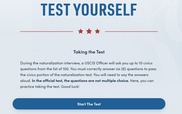
  • Take the US Naturalization Exam—available in short, intermediate, and full formats—and receive real-time feedback on your results.
  • Let students test their knowledge (and compete against classmates) in hands-on, interactive quizzes created in partnership with Kahoot!, the acclaimed global learning platform.
  • Watch brief educational videos with historians and civic figures which explore the historical significance behind each test question.
  • Use free teaching resources aligned with history and civics standards for grades 3–12, including lesson plans and multimedia content to encourage classroom discussions on civic engagement.

Explore their Citizenship Test hub.


Monday, October 21, 2024

Engage Your Students with Civics Education


Get in Touch!

How else can we help? Let us know. Or maybe you have other ideas you want to share? Email MT 250 Coordinator Devon Malizia at devon.malizia@mt.gov.

Thursday, October 26, 2023

Guest Post from Montana PBS

Thanks to Martha and the team at the Montana Historical Society for letting me take over the newsletter today! My name is Nikki and I am the Director of Education at Montana PBS. I get the fun job of helping teachers use media and technology in their classrooms! 

Montana PBS Education supports teachers in Montana by offering FREE professional development opportunities and producing classroom resources published on PBS LearningMedia. PBS LearningMedia is a free content site for K-12 teachers who want to use PBS media in their classrooms. Did I mention that it’s free? We just published a brand new collection about the Montana State Parks, with videos and lesson ideas for teachers planning a field trip to one of the parks this school year.  

In addition to resources on PBS LearningMedia, teachers can participate in the MTPBS Watch and Learn program to earn OPI credit for watching full films produced by Montana PBS and completing a reflection activity. 

Montana teachers are invited to attend our free virtual workshop about the new film from Ken Burns, American Buffalo. There is also a way to watch the full film and earn credit for doing it! 

Read below to learn more about our programs and reach out to Nikki Vradenburg, Director of Education for more information! 

Watch and Learn PD

Build your content knowledge while being inspired to create engaging lessons for students when you watch full-length, award-winning programs from PBS and Montana PBS–and earn credit for doing it! This FREE professional development activity can be done when and wherever you are and is always open–no deadlines!  

Getting started is easy! 

  • Explore this catalog of local and national productions from PBS and Montana PBS. 
  • Fill out a form to sign up to view as many of the films as you want. 
  • Watch your email for directions about how to watch the film and complete the reflection activity. 

American Buffalo PD Opportunities

Virtual Workshop November 1, 4:00 p.m.

The American Buffalo is a new documentary by Ken Burns that premiered on PBS in October 2023. It is the dramatic story of the national mammal’s near extinction. In this free, one hour workshop on Wednesday November 1 at 4 p.m., teachers will view clips of the film and learn about resources for teaching with the film.

Zach Hawkins and Mike Jetty from the OPI Indian Education for All team will share OPI resources for teaching about the buffalo created by their team. Teachers will earn 1 OPI credit for attending this workshop and a chance to win a lesson toolkit including a DVD copy of the film and books about the buffalo to use with students. This workshop is for anyone who works with students in grades 3-12 interested in sharing the rich history of the buffalo. 

Register using this link.

View the Full American Buffalo Film for Credit

In the month of November, teachers can watch American Buffalo online for free and earn 5 OPI credits for completing a reflection activity about the experience. This is a limited time opportunity since free on demand streaming will only be available until November 30. Click here to register! 

Parks of Montana Collection on PBS LearningMedia

Graduate students from MSU and UM work with Montana PBS as graduate assistants. They earn a tuition waiver and a small stipend to collaborate on the production of digital resources for Montana classrooms. We are in the third year of this project and are proud of our growing collection of resources about the Parks of Montana. 

Montana is home to fifty-five state parks—each with its own unique wonders. The Parks of Montana project aims to showcase the amazing features of these public lands and to teach a variety of lessons from different content areas to elementary students. Within the collection are resources for teachers and students preparing to visit the park, reflecting on a previous trip, or exploring the parks virtually. From caves and lakes to fossils and historic sites, Montana's state parks are magnificent places to explore at-home and on site! Click here to check it out!


Monday, September 4, 2023

Montana's Labor History

 This is a less practical post than most, but since it's Labor Day, I thought I'd share some resources relating to Montana's labor history. 

First up is this tour in Historic Montana, which features (in brief) a few of Montana labor temples, union halls, and other union-related sites, from Missoula's Free Speech Corner in Missoula to Forsyth's Brotherhood of Locomotive Engineers Hall. Note: There are MANY sites that are not included in this list. Not every town in Montana had (or has) a significant union presence, but every railroad division and subdivision point, logging, or mining town did. Where did working people (primarily workingmen) gather in your community?

My colleague, Rich Aarstad, created an intriguing timeline of Montana labor history. Reading it over, several things surprised me, including the first workers to organize a union in Montana in 1866. It's not who you think.

Butte was known as the Gibraltar of Labor, so it's not surprising that there is a lot of material connected to the city.

Most of Montana's unions were exclusively male, but not all of them. Here's a short article about Butte's Women’s Protective Union. Before Montana passed legislation guaranteeing women equal pay for equal work in 1919* (forty-four years before the 1963 federal Equal Pay Act!), women hired to work for the Northern Pacific Railroad in Livingston during World War I received the same wages as their male counterparts because of the union. 

The Montana Historical Society has digitized over 600 oral histories with Montana workers Voices of Labor. I'm honestly not sure how--or whether--teachers can use these. I'd love your ideas. I do know that before looking at any of these oral histories, you, or your students, will want to look at the index, which lists topics covered in the interviews. (Links to the indexes are at the top of the page.) University of Montana has also digitized its Unions and Labor Oral History Collection. 

Happy Labor Day.

*I learned this from Rich's Montana Labor History Timeline, too!


P.S. Don't miss the first of our monthly Monday Meetups, September 11, 4:00 p.m.-5:00 p.m. where I'll be sharing an Introduction to Montana Historical Society Resources. Register to earn one Renewal Unit. 

Thursday, August 31, 2023

Engage Your Students with Indigenous Stories

 The Big Sky Film Institute is once again partnering with the Montana Office of Public Instructions Indian Education Unit to share films made by and about Native people. According to their Facebook post in the Teaching Montana History Facebook group: 

The 2023 season of the NFI Film Club [Native Filmmaker Initiative] presents "Celebrating Cultures & Honoring Traditional Practices," a triptych of films curated to engage Montana youth with unique and uplifting stories of Native and Indigenous individuals ... who are building strength through their communities and upholding traditional practices in the modern day. Our films are selected and ready for teacher registration, each one accompanied with an accompanied discussion guide, streaming link to view the film and an invitation to join our live filmmaker Q&A with film teams and OPI’s Indian Education Specialist, Mike Jetty.

Here's more from their website: 

The Native Filmmaker Initiative Film Club is a virtual youth education outreach program that screens a curated selection of Indigenous-made documentary films in classrooms across Montana. Following the screenings, filmmakers visit classrooms virtually for a live Q&A and discussion activities rooted in Montana's Indian Education for All Essential Understandings. Film Club discussions are led by the Big Sky Film Institute in collaboration with Montana Office of Public Instruction’s Indian Education Specialists as well as participating filmmakers to talk in-depth about the process of filmmaking....

Running October through December, each Film Club event will focus on diverse Indigenous subjects and topics. Consult the discussion guides to help adapt the Film Club activities into social studies, science, history or other areas of study. Films are available to view in advance of Film Club discussions and each classroom will receive access to discussion guides and instructions on how to join the live Q&A.

Visit the Native Filmmaker Initiative website to register your classroom to view one or more of this year's films. Registration includes a screening link to the film with details to join a live filmmaker Q&A and accompanied discussion guides. Email Director of Education, Julia Sherman, at julia@bigskyfilmfest.org for more information, or to be added to their Youth Programs email list.

Here are the three films they will be showing this fall (text from the NFI website): 

October 11: Snqʷeyłmistn (pronounced, SING-KWAY-SH-MEE-STOIN), 7 minutes

Following the native-led organization ​Snqʷeyłmistn, this short portrait follows key players behind the organization's mission and seasonal programming which aims to foster Salish community immersion for foster children of the Flathead Reservation in Montana. With programs and activities designed to empower, strengthen, and inspire generational change, the organization offers indigenized solutions for foster care issues across the Flathead Reservation and greater Indian Country.  RECOMMENDED FOR ALL AGES & GRADES

November 15: Shrampari: Legacies of the River, 16 minutes

In one of the most remote places in the Peruvian Amazon, an Ashéninka boy must overcome his fears to start his journey as an adult: catching a giant catfish using only a hook. RECOMMENDED FOR GRADES 3+ (DUE TO SUBTITLES, OTHERWISE SUITABLE FOR ALL AGES)

December 12: Jonathan Thunder, Good Mythology, 14 minutes 

Follow Anishinaabe artist Jonathan Thunder as he dives deep into the inspirations behind his surrealist paintings and animations. From the killing of an iconic American hero to critical perspectives of how Indigenous people were portrayed in early children’s cartoons, Thunder’s art prompts viewers to reexamine our shared mythologies. THIS FILM IS RECOMMENDED FOR GRADES 4+

On their website you can also find links to past film club films and discussion guides. These films cover topics that are sure to connect with your students: skateboarding, boxing, mountain biking, fly fishing and horse racing to bison restoration and the water protectors movement. They also have a film notetaking guide that could be useful for any film you watch with your students. 

If you are interested in bringing authentic Indigenous voices and perspectives into your classroom--and I hope you are!--this is an amazing resource.

P.S. Don't miss the first of our monthly Monday Meetups, September 11, 4:00 p.m.-5:00 p.m. where I'll be sharing an Introduction to Montana Historical Society Resources. Register to earn one Renewal Unit.      

Monday, April 3, 2023

Cross Curricular Integration

Back in February, I shared Bill Moe's strategy for getting students to explore Charlie Russell's paintings. Carrie Sorenson took Bill's idea a step further and conducted an actual auction and images from the PowerPoint of the Russell images we created as part of our Teaching Montana's Charlie Russell materials.

She said: "I  used fake money, and picked 5 of his pieces from the Powerpoint, and actually ran an auction with auction numbers and everything.  They LOVED IT!  And asked me to print out the painting they purchased in color so they could take them home.  I had 4 boys negotiate a cooperation so they could go together and buy one of them." She's thinking of framing some post cards next year.

Charlie Russell's paintings are a great way to integrate art and social studies. In March, Big Fork Teacher and Teacher Leader in Montana History Cynthia Wilondek shared other ideas for integrating Montana history into other curriculums at our final online PD of the season.

Because it was Women's History Month, she suggested

Since I think Women's History Month is EVERY month, I'm including her plug in this post.

Cynthia also pointed attendees to OPI's website, which lists IEFA lessons by disciplines and grade levels.

She suggested that science classes could examine the environmental impact of mining, pointing to this PPT for background. (Fourth-grade teachers will want to look Part 3, Lesson 3, Mining Today, in the Montana: A History of Our Home curriculum for lessons.) 

She suggested using the digitized Montana newspapers to teach American history (why not use examples from Montana). She also spent some time on Structured Academic Controversy (an alternative to debate) that attendees found particularly valuable.  

All and all, it was a very valuable session and hopefully these links can inspire you even without listening to Cynthia's enthusiastic delivery. Want more? Check out our Interdisciplinary Lesson Plans page. 

 Apply to Become a Teacher Leader

Middle school teachers! If you love Montana history and want to share your passion with colleagues, consider applying to become a Teacher Leader in Montana History. Find out more here. Applications are due April 23.   

Thursday, March 9, 2023

New Name, Even More Great Primary Sources

 The Montana Memory Project has changed its name. It's now the Montana History Portal. It's changed its look and its interface, too. I haven't spent much time on the new site, but director Jennifer Birnel says it's an improvement. She's particularly excited about 

  • the new top menu, which will make it easier to navigate to the Collections, Contributors, and Exhibits pages from anywhere in the site, and
  • the new Featured Items section, which will provide easy access to new collections and digital exhibits.

Don't forget to submit your student stories to the Montana History Portal's Third Annual Historical Picture Prompt contest. (The deadline to enter is March 17, 2023.) Learn more here.

And stay tuned for information about their annual Meme-ory Contest, which usually takes place in May. Here are last year's winners in the age 10-18 category, the age 19-40 category, and the age 41-120 category.

Looking for inspiration on how to use primary sources with your students? Here are some past posts that address this issue.

P.S. Don't forget to register for our last online PD, March 13, 4:00 p.m.-5:00 p.m.: Integrating Montana History across Disciplines, led by Teacher Leader in Montana History Cynthia Wilondek


Monday, January 23, 2023

Black History Resources

Every month is Black History Month, right? But because folks pay more attention to Black history in February, I decided to share a few resources. The first two are probably most useful for middle and high school teachers. The last is probably most useful to elementary teachers. 

Hidden Stories: Montana's Black Past 

Everyone should watch this remarkable video, produced by Kate Hampton of the Montana Historical Society's State Historic Preservation Office. Completed in 2022, the 57-minute movie traces Montana’s African American history from the Civil War to the present day. It foregrounds Montana’s pioneering Black residents and frames their experiences within the greater context of Montana history across space and time. I just found out it is debuting on Montana PBS on February 13, but it is also available to view on YouTube.

Elementary and middle school teachers should watch it for background knowledge, but we think high school teachers should share it with their students. Colleague Bryan Baldwin created this teaching guide, which breaks the video into three parts, and provides summaries, discussion questions and vocabulary terms for each part. 

Montana African American Heritage Resources Website

There is so much information collected on this website, including a number of brief essays on various aspects of Montana's African American history; census data from 1910 and 1920; and a list of laws passed by the Montana legislature intended either to discriminate against or protect the rights of its African American citizens. My very favorite item on this site is the Story Map, “Montana in the Green Book”.

"Between 1936 and 1967, Victor H. Green & Company published The Negro Motorist Green Book, which offered listings of lodgings, restaurants, service stations, and recreation opportunities for African American travelers. According to the 1949 introduction, the publication's goal was "to give the Negro traveler information that will keep him from running into difficulties, embarrassments and to make his trips more enjoyable. ... It will be a great day for us to suspend this publication for then we can go wherever we please, and without embarrassment." Find out which Montana venues advertised that they welcomed African American travelers. 

Elementary Lessons

Last year I worked with the Helena Black History Education Initiative to create six elementary school lessons. Each is tied to an anchor text and includes an activity. Only one is related to Montana history. You can read more about and find links to the lessons here. 


Thursday, November 17, 2022

Finding and Using Primary Sources

 One question I'm often asked is "where can I find good primary sources?" Nationally, my first stops are the Library of Congress, the National Archives, and Digital Public Library of America, all of which have exhibits, curated primary source sets, and educator resources to make it easier to find useful material. For Montana, my first recommendation is always the Montana Memory Project, the Montana Historical Society, digitized newspapers, and your local museum, archives, or historical society.  

Montana Memory Project Exhibits

The Montana Memory Project has a huge number of sources--so many that it can be overwhelming. To make it easier for educators to find material, it gathered a group of classroom teachers to create primary source sets. Many of these sets are now posted on their exhibit page. Its own staff has also been creating exhibits, all of which include selected primary sources on a particular topic along with a little bit of contextual narrative. Here are a few titles that caught my eye, but there are many more--and still more being added on the Memory Project's Exhibit Page.

MTHS Annotated Resource Sets

A few years ago, we created eleven annotated resource sets that include links to photographs, maps, illustrations, and documents relating to Montana history topics from the gold rush and homesteading to World War I and the Great Depression. Many, but not all, of the images linked in these sets were also used to illustrate the textbook Montana: Stories of the Land. We didn't create a set for every chapter, but we did for most of the most popular ones. 

Digitized Newspapers

My colleague, reference librarian Zoe Ann Stolz, likes to say that historic newspapers are the closest thing we have to a time machine. The Montana Historical Society has digitized over a million newspaper pages from over 230 newspapers. These papers are on two different sites: Montana Newspapers and Chronicling America. (There is no overlap between sites so you have so search both.) 

Using Primary Sources

How do you use these sources? An old article published by the Library of Congress (no longer online) suggested four types of activities: Focus, Inquiry, Application, and Assessment.  

Here are a few ideas that could fall into these broader categories:

But I'd love to hear more from you! What are YOUR favorite ways to use primary sources? 

P.S. No one has time to build every lesson from scratch. Check out some of our plug-and-play primary-source based lesson plans.

Thursday, September 22, 2022

Montana's Economy Story Map

 If you're a fourth-grade teacher, I hope you've started teaching Montana: A History of Our Home. If your school has been able to purchase the book, great! If not, I hope you tap into our website, where we've posted the PDF of the book for download as well as each chapter of the online teachers guide. If you have students with learning disabilities, you can find an audio version of the book through Learning Ally. 

One of the Unit One lessons has students exploring a Story Map about Montana's economy. Unfortunately, I forgot to include the link to the story map in the print version of teacher's guide. It is in Unit 1 of the online teacher's guide. And it's here.

If you come across any other errors as you use this curriculum, please don't hesitate to let me know. (Kudos are always welcome too, of course.)

Thursday, April 21, 2022

A Little of This, A Little of That

 Present

There's still time to submit a proposal to present at MFPE's October 20-21, 2022, Educator Conference--either in Helena or online. Applications are due April 30. 

Explore

After 72 years of confidentiality, the 1950 Census is here! The 1950 census is now available for everyone to view on a free, dedicated website from the National Archives. If you use the census with your students, tell us how! Check out the lesson we created using the census for Unit 3 of Montana: A History of Our Home (Part 5: Logging, p. 145.)  Learn more about the Montana: A History of Our Home curriculum here.   

Check out Museums for Digital Learning, "a unique learning platform that provides K-12 educators with authentic, curated museum collection resources to help inspire their students. MDL content and interactive features are developed by museum education and curatorial professionals in consultation with classroom educators and technology consultants. MDL Resource kits have multiple activities to engage learners and support national standards in different subjects. All content is free to use and can be shared to a learning management system or on social media." (I learned about MDL from a post made by Michelle Pearson in the Teaching Montana History Facebook group. If you are a Facebook person, join us!  

Learn

The lineup for the Fifteenth Annual IEFA Best Practices conference has been finalized and it looks fabulous. Check out and then register for this virtual event, to be held May 14-15. 

Help

Whitehall high school teacher Merrick Parnell is working on his master's degree and is hoping that 9-12 social studies teachers will email him with the answer to this question: "What aspects of social studies content do your students struggle with?" His email is merrickparnell5@gmail.com.